Showing posts with label Preliminary Excercises. Show all posts

Monday, January 9, 2023

Equipement

We used a Canon M50 Mk 1 with a 50mm Prime Lense

Iso Settings for low light were 1000 and for daylight 100

Aperture was set to 1.8 during the entire shoot

Shutter speed was set to 100 in low light and in daylight it was around 2500

Tuesday, December 13, 2022

Montage Task (First Day)


 So our Media Studies Sir gave us the task to create a short montage on the topic ''The First Day of School''. Me and my group were looking forward to this kind of opportunity and created the montage and tried our level best to create the final product.

Director : Areesha Nasir Ali

Director of Production : Ali Zain

Cinematographer and Editor : Mohammad Ali Khan

Actor : Meesam Tammar

Here is the link to the video First Day


Short Film Practice Assignment

 Link to the video

LATE

LATE is a short film made as an assignment for Media Studies. It features a student who is late for school, All the emotion trauma he goes through is shown in the promo video.

Tuesday, November 1, 2022

Thursday, October 27, 2022

Monday, October 17, 2022

Friday, September 30, 2022

Thursday, September 29, 2022

Camera Angles (Assignment)

 This is an updated version of the camera angles task given to us by our tutor of Media Studies Sir Jamal. All the final angles and shots are present in this post.


CAMERA SHOTS;

                                             -EXTREME LONG SHOT (ELS) 
This shot includes and focuses more on the setting of a scene where the subject is not necessarily the focus anymore but the background and surrounding is. It is also used as an establishing shot of a film where it gives the watchers a clear idea of the situation.

                                                        -LONG SHOT (LS)
Then follows the long shot which is almost similar to the extreme long shot but the frame contains lesser part of the background and focuses more on the subject. The subject in the long shot is present from head to toe in the frame. 


                                             -MEDIUM LONG SHOT (MLS)
Medium long shot also known by the name ‘three-quarters shot’ or the ‘knee shot’, is the intermediary shot between medium and long shot. It mainly frames the subject from the head down to the knees, covers a wide angle and is one of the most common frames used in visual storytelling. A tip here is to never cut on the joints (such as the knee joint or other joints of the human body) as it would make the subject seem amputated. Always frame the subject above or below the joints.

-MEDIUM SHOT (MS)
Next comes the medium shot. This shot basically focuses on the subject’s waist up till the top all the way through the torso. Medium shot is also amongst the most common shots. The background is still visible while the subject remains the center of focus.

     -MEDIUM CLOSE-UP (MCU)
 As the name hints, this shot is the average between medium shot and a close-up shot, usually shows the need of taking place just before a close-up followed by an extreme close up to escalate the emotions projected by the scene. A medium close-up is slightly above the chest and favors the subject’s face but still keeps the subject distant.


-CLOSE-UP (CU) 
 A close-up portrays just the right amount of dramatic effect over the viewer. It reveals the subject’s emotions and reactions. A close-up shot covers only the face of the subject more so often which helps in an utterly emotional or tear-jerking scene. This is also one of the hardest shots for an actor to shoot since their acting and expressions solely are at the display

      -EXTREME CLOSE-UP (ECU)

An extreme close-up emphasizes on a single feature mainly to project its intensity. For e.g., if it covers the eyes, the anger, fear or disappointment is used to show through their expressions. It can also cover any other subject such as a gun, a hand or a car wheel.

                                         -OVER-THE-SHOULDER SHOT (OTS)
An over-the-shoulder short is used to shoot a conversation between two people and indicates the little distance between them telling the personal nature of the conversation. The camera is angled at the shoulder of one person to cover the subject.

-TWO-SHOT (2S) 
 
 Lastly, we have two-shot, used to focus on subjects existing side by side, mostly used to 
shoot scenes when two or more people are conversing.


CAMERA ANGLES 

he camera angle or the camera shot angle is the position of the camera in relation to the subject. The degree of these angles can have a dramatic impact on the viewer and can change the meaning of the shot.

The different types of camera angles used in visual storytelling are listed below:

                                                                                  -EYE-LEVEL
This angle is very basic, positioned in a fashion that the subject’s eye is in level with the lens and gives the viewer a realistic view of the scene. 

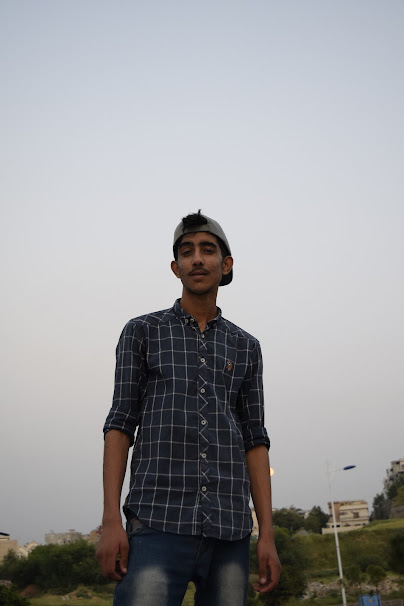
 -LOW ANGLE

Then comes the famous low angle, it is shot from a very low angle as suggested by the name and gives a larger effect of the subject to the audience. It is primarily used to channel power and dominance. Hence, mainly used to portray a heroic figure.

An extreme low angle shot filmed by literally placing the camera on the floor is called worm level shot.

  -HIGH ANGLE

Again, suggested by the name and totally opposite the low angle, its shot from an elevated angle, hence, gives a demeaning effect on the

subject making them look helpless and in utter distress as it appears to be projected as smaller in comparison to actual size.

An extreme high angle shot literally taken from the sky or a point high above is also called a bird’s eye view shot / aerial shot / overhead shot.


Wednesday, September 28, 2022

First Day at HighSchool

    Here is a short film on the first day of high school of a kid we worked on last year

Directed by Fayzan Khalid and Muhammad Zohaib

Shots by Muhammad Ali Khan

Edited By Fayzan Khalid

Link to the video    

 First Day

Creative Critical Reflection (CCR)

  Creative Critical Reflection